
Choosing the right tent is not only about finding a place to sleep outdoors. For many campers, the real challenges appear before the first night: complicated setup, limited interior space, poor weather protection, and choosing a design that does not match the actual camping scenario.
Instant Camping Tents are designed for users who want faster setup, easier operation, and more practical outdoor shelter. They are widely used for family camping, weekend trips, outdoor events, festivals, and commercial outdoor activities.
Table of Contents
Why Are Instant Camping Tents Becoming Popular for Modern Outdoor Trips?
Traditional camping tents often require multiple steps before they are ready:
- assembling poles
- connecting frame sections
- adjusting tension
- securing multiple points
For experienced campers, this process is manageable. However, for families, beginners, or event organizers, setup time can become a major inconvenience.
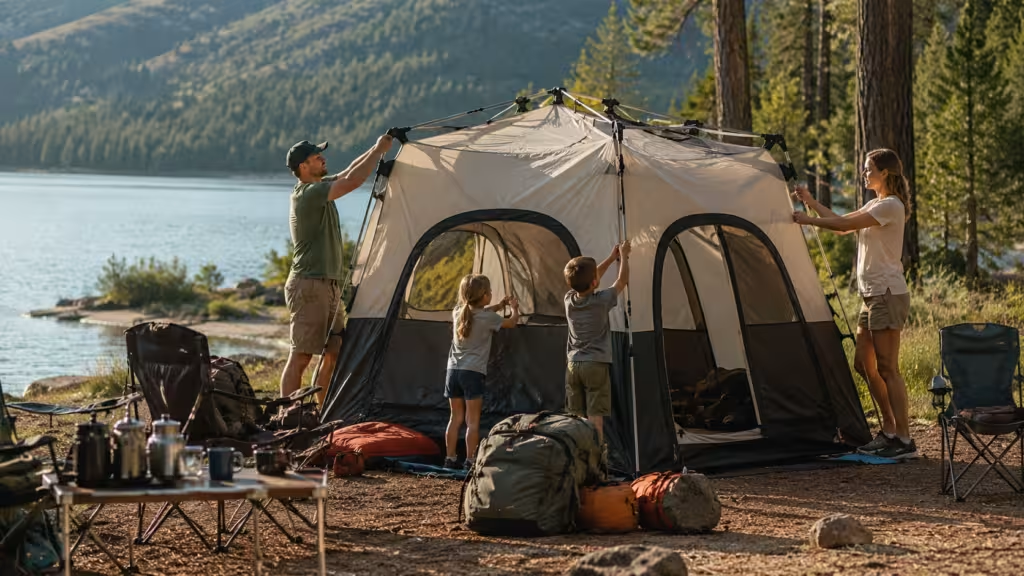
An instant setup tent uses a pre-attached frame structure that reduces assembly complexity. Instead of building the frame piece by piece, users can usually unfold and secure the tent in a much shorter time.
This makes instant tents suitable for:
- family camping trips
- weekend outdoor activities
- music festivals
- beach camping
- recreational parks
- emergency outdoor shelters
According to the outdoor recreation information published by the Outdoor Industry Association, camping participation continues to include a wide range of users, from experienced outdoor enthusiasts to casual recreational campers. This shift has increased demand for easier-to-use outdoor equipment.
For first-time campers, the biggest advantage is not only speed. It is reducing the learning curve.
A tent that can be quickly assembled means more time spent enjoying the outdoors and less time dealing with equipment.
How Does an Instant Tent Compare With a Traditional Camping Tent?
The choice between an instant tent and a traditional tent depends on the camping environment.
An instant tent focuses on convenience and fast setup, while traditional tents often focus on lighter weight and compact transportation.
| Comparison Factor | Instant Camping Tent | Traditional Camping Tent |
|---|---|---|
| Setup process | Faster, fewer assembly steps | Requires manual frame assembly |
| Beginner usability | Easier for new campers | Requires more experience |
| Packing size | Usually larger due to integrated frame | Often more compact |
| Best use | Family camping, events, leisure trips | Backpacking and lightweight travel |
| Interior comfort | Often provides more usable space | Depends on design |
For users traveling by car, RV, or short-distance outdoor trips, an instant tent is often more practical because portability is less restrictive.
However, backpackers who carry all equipment over long distances may still prefer lightweight traditional tents.
The right choice depends on how the tent will be transported and used.
What Size Instant Camping Tent Do You Need for Different Camping Groups?
One of the most common buying mistakes is choosing a tent based only on the advertised capacity.
A “4-person tent” does not always mean four adults can comfortably live inside with camping equipment.“
When selecting an instant camping tent, consider:
- number of people
- sleeping arrangement
- storage space
- weather conditions
- length of the trip
General Size Guide
| Camping Group | Recommended Tent Size |
|---|---|
| 1–2 people | Compact instant tent |
| Couple with equipment | 3–4 person tent |
| Small family | 4–6 person tent |
| Large family or group | 6+ person tent |
For family camping, additional interior space is usually valuable because campers need room for:
- bags
- shoes
- clothing
- camping accessories
- children’s activities
This is why many families choose larger instant camping tents even when fewer people are sleeping inside.
Are Instant Camping Tents Waterproof Enough for Outdoor Conditions?
A common question from buyers is:
Are instant camping tents waterproof?
The answer depends on the tent construction, materials, and weather conditions.
Water resistance is influenced by several factors:
Fabric Coating
Many outdoor tents use coated fabrics to improve water resistance.
Common factors include:
- coating thickness
- fabric quality
- waterproof treatment
The concept of waterproof fabrics is explained in detail by Wikipedia’s overview of waterproof fabric technology, including how coatings and membrane structures affect water resistance.
Seam Protection
Even waterproof fabric can allow water penetration if seams are not properly treated.
Important details include:
- sealed seams
- reinforced stitching
- protected zipper areas
Ventilation Design
A completely sealed tent can create condensation problems.
Good instant tents balance:
- rain protection
- airflow
- comfort
Features such as mesh windows, vents, and adjustable openings help manage humidity during overnight camping.
For buyers planning outdoor use in changing weather, waterproof rating should be considered together with ventilation and structure.
Four-Corner vs Six-Corner Instant Tents: Which Design Fits Your Needs?
Different frame structures affect interior space, stability, and user experience.
For example:
Four-Corner Instant Camping Tent
A four-corner design is often selected for:
- simpler setup
- easier transportation
- smaller family trips
- casual outdoor use
It can be a practical option for users who prioritize convenience and compact storage.
Six-Corner Instant Camping Tent
A six-corner structure generally provides:
- more interior space
- improved layout flexibility
- better use of floor area
It can be suitable for:
- larger families
- longer camping trips
- users needing more living space
What Should Outdoor Brands Check Before Ordering Custom or Wholesale Camping Tents?
Instant camping tents are not only purchased by individual campers. Outdoor retailers, event companies, and camping businesses often require customized or bulk orders.
For companies looking for custom instant camping tents or wholesale camping tents, the selection process should focus on practical manufacturing factors.
Important considerations include:
Material Options
Check:
- fabric type
- waterproof coating
- UV resistance
- stitching quality
Customization Capability
Possible customization options include:
- logo printing
- color selection
- packaging design
- accessories
Production Consistency
For bulk orders, consistency matters.
Buyers should evaluate:
- sample testing
- production capacity
- quality inspection process
- delivery capability
A suitable supplier should understand both outdoor performance requirements and commercial purchasing needs.
Are Instant Camping Tents Waterproof Enough for Rain, Wind, and Changing Weather?
Yes—but only if the entire shelter system is designed for wet-weather performance, not just the fabric.
Many buyers pay attention to waterproof ratings while overlooking frame stability, seam construction, ventilation, and rainfly coverage. These factors work together to determine how a tent performs during an overnight storm.
According to the U.S. National Weather Service, wind and rapidly changing weather are among the most common hazards during outdoor recreation, making proper shelter selection an important part of trip planning.
Waterproof Fabric Is Only One Part of the Equation
When comparing a waterproof camping tent, look beyond marketing terms.
A practical evaluation should include:
- Waterproof coating
- Seam sealing
- Rainfly coverage
- Floor material
- Ground waterproofing
- Fabric durability after repeated folding
Many camping tents use polyester fabric with PU coatings. However, coating thickness alone does not guarantee better field performance if seams or zippers become water entry points.
Final Thoughts
Choosing instant camping tents is less about finding the most expensive model and more about selecting a shelter that matches the way it will actually be used.
A family planning weekend road trips has different priorities than a hiking enthusiast. Likewise, an outdoor retailer purchasing wholesale camping tents or developing custom camping tents for private-label sales should evaluate manufacturing consistency, quality control, and customization capabilities alongside product performance.
If you’re comparing frame styles, start with the intended camping scenario:
- Smaller groups often appreciate the portability of a 4-corner instant tent.
- Families or users who need additional living space may benefit from a 6-corner instant tent.
Making the right choice before purchase helps reduce setup frustration, improves outdoor comfort, and ensures the tent continues to perform across many camping seasons.
FAQ
Are instant camping tents suitable for beginners?
Their integrated frame design reduces assembly steps, making them easier for first-time campers compared with traditional pole-by-pole tents.
How long does it take to set up an instant camping tent?
Most instant camping tents can be unfolded and secured within a few minutes, although actual setup time depends on tent size, weather conditions, and whether stakes and guy lines are installed.
Are instant camping tents waterproof enough for heavy rain?
They can perform well in rainy conditions when equipped with waterproof-coated fabric, sealed seams, a full rainfly, and proper ground protection.
No tent should be expected to remain dry if it is incorrectly installed or used in extreme weather beyond its intended design.