

An instant camping shelter is most valuable when speed, flexibility, and temporary protection matter more than overnight accommodation. If you’re planning a weekend camping trip, organizing a backyard gathering, supporting a sports event, or sourcing shelters for commercial activities, choosing the right shelter depends on how it will actually be used—not just its size or appearance.
This guide explains the real-world scenarios where an instant camping shelter performs best, when a traditional tent is the better option, and what purchasing managers, outdoor equipment distributors, event organizers, and rental companies should evaluate before placing an order. You’ll also learn how a portable outdoor shelter and an easy setup outdoor tent can support both personal recreation and commercial operations.
Is an Instant Camping Shelter Better Than a Traditional Tent for Short Trips?
For many weekend activities, the answer is yes.
Traditional camping tents are designed primarily for sleeping overnight. They require more setup time and usually prioritize enclosed space over accessibility.
An instant camping shelter, on the other hand, creates an open covered area within minutes. It is intended for shade, light rain protection, food preparation, equipment storage, or gathering space rather than sleeping.
The comparison becomes clearer when looking at actual use.
| Activity | Instant Camping Shelter | Traditional Tent |
|---|---|---|
| Day trips | Excellent | Less practical |
| Family picnic | Excellent | Limited |
| Overnight camping | Shelter only | Better choice |
| Outdoor events | Excellent | Not recommended |
| Backyard party | Excellent | Rarely used |
For families arriving at a campsite on Friday evening, saving 15–20 minutes of setup allows more time for cooking, relaxing, or preparing equipment before sunset.
Which Weekend Outdoor Activities Benefit Most From an Instant Camping Shelter?
The best instant camping shelter for weekend outdoor activities is one that matches how people actually spend time outdoors. Rather than focusing on technical specifications alone, buyers should consider how often the shelter will be assembled, transported, and stored.
Weekend Camping
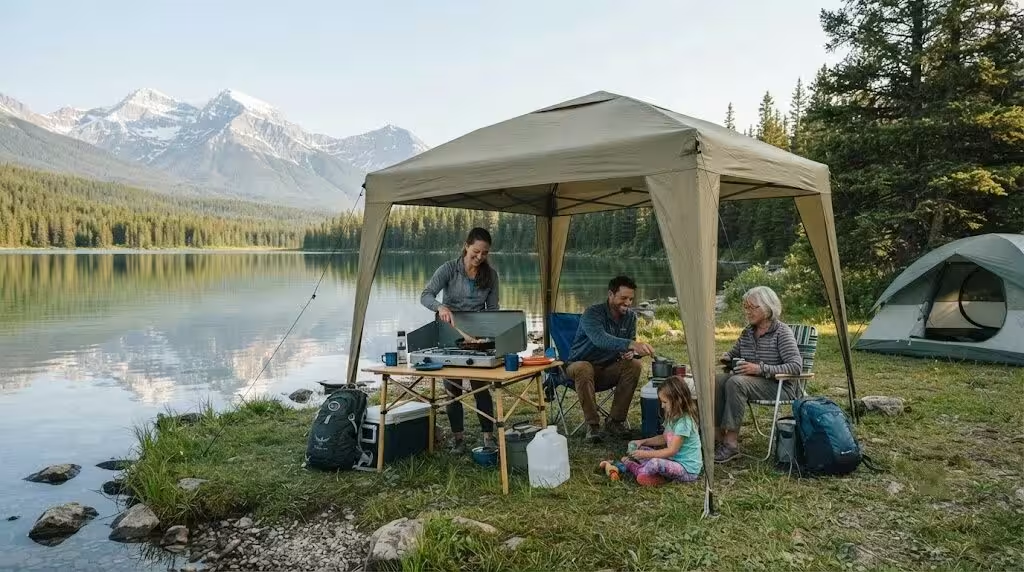
Weekend campers often spend more time outside the sleeping tent than inside it.
An easy setup outdoor tent used as a communal shelter creates space for:
- meal preparation
- folding tables
- camping chairs
- portable refrigerators
- charging stations
- equipment storage
Instead of everyone sitting inside sleeping tents during light rain, the shelter becomes the shared living area.
For campground operators, adding several portable shelters also improves common-use facilities without permanent construction.
Backyard Gatherings
One of the fastest-growing applications is backyard entertainment.
An instant camping shelter can provide temporary shade for:
- birthday parties
- family barbecues
- graduation celebrations
- children’s play areas
- outdoor dining
Unlike permanent gazebos, portable shelters can be stored after use, making them suitable for homeowners with limited outdoor space.
For retailers and outdoor equipment suppliers, backyard use has become an important seasonal sales driver because many customers want flexible shade rather than permanent structures.
Beach Days and Fishing Trips
Beach camping presents different challenges.
The primary concern is usually sun exposure rather than overnight protection.
A portable outdoor shelter provides:
- UV protection
- equipment storage
- shaded seating
- food preparation area
For fishing trips, anglers often need quick protection without carrying heavy equipment over long distances.
Lightweight shelters with compact packed dimensions simplify transportation between parking areas and shoreline locations.
The U.S. National Weather Service recommends preparing appropriate shade solutions during extended outdoor activities because prolonged exposure to ultraviolet radiation increases health risks.
Community Sports and School Events
Schools, youth sports clubs, and local event organizers increasingly use portable shelters for temporary event infrastructure.
Common examples include:
- registration desks
- medical stations
- timing equipment
- refreshments
- volunteer coordination
For purchasing managers responsible for recurring outdoor events, shelters with replaceable canopy tops and standardized frame sizes are usually easier to maintain over multiple seasons than low-cost disposable alternatives.
Bulk buyers should also evaluate spare parts availability, packaging efficiency, and replacement fabric options before selecting a supplier.
Can a Portable Outdoor Shelter Support Commercial Outdoor Operations?
Many buyers associate instant shelters with recreational camping, but commercial users often have different priorities.
For example:
- event rental companies require fast assembly between multiple venues
- tourism operators need temporary guest facilities
- outdoor equipment distributors evaluate transport efficiency
- promotional event teams require branded canopy options
- municipal organizations often purchase shelters for seasonal community events
In these situations, setup speed is only one factor.
Procurement teams also compare:
- frame material
- canopy fabric specifications
- wind resistance
- replacement component availability
- packaging dimensions
- container loading efficiency
- customization options such as logo printing or private labeling
According to the Federal Emergency Management Agency (FEMA), temporary shelters used during public events or emergency support should be selected according to operational requirements and environmental conditions rather than appearance alone.
When Is an Instant Camping Shelter Not the Right Choice?
An instant camping shelter is versatile, but it is not designed for every outdoor situation. Understanding its limitations helps buyers avoid choosing the wrong product.
Extended Overnight Camping
If the primary goal is sleeping outdoors for several nights, a traditional camping tent provides better weather protection, insulation, and privacy.
Many campers combine both products:
- Sleeping tent for overnight use
- Portable outdoor shelter for cooking, dining, and relaxing
This combination offers greater flexibility than relying on a single shelter.
High-Wind or Extreme Weather Conditions
Pop-up shelters are intended for temporary use.
In exposed mountain areas, coastal locations with strong winds, or severe weather conditions, users should select products with:
- reinforced frames
- guy ropes
- ground stakes
- proper anchoring systems
The American Red Cross recommends securing temporary outdoor structures before severe weather and avoiding lightweight shelters during high-wind conditions.
Long-Term Fixed Installations
For restaurants, parks, or permanent outdoor seating areas, fixed steel or aluminum structures are often more appropriate.
An instant camping shelter is designed for mobility rather than permanent installation.
Choosing the right solution depends on how frequently the shelter will be relocated.
How to Choose the Best Instant Camping Shelter for Your Activities
Choosing the best instant camping shelter for weekend outdoor activities starts with understanding how it will be used rather than comparing specifications alone.
Match the Shelter to the Activity
| Activity | Recommended Shelter Features |
|---|---|
| Weekend camping | Lightweight frame, fast setup, waterproof canopy |
| Backyard gatherings | Larger shade area, removable sidewalls |
| Sports events | Compact transport size, quick assembly |
| Outdoor markets | Commercial-grade frame, replaceable canopy |
| Event rental businesses | Reinforced joints, interchangeable parts |
| Campground operators | UV-resistant fabric, durable frame construction |
For wholesale buyers, distributors, and sourcing teams, selecting standardized frame dimensions can simplify inventory management and future replacement part procurement.
Consider Frame MaterialConsider Frame Material
Frame material directly affects transportation weight and durability.
Generally:
- Steel frames provide additional stability for repeated commercial use.
- Aluminum frames reduce carrying weight for camping and recreational users.
Instead of asking which material is “better,” ask which one fits the operating environment.
Evaluate Fabric Performance
The canopy fabric should be selected according to the intended application.
Key considerations include:
- UV protection
- waterproof coating
- tear resistance
- color stability
- cleaning requirements
According to the Skin Cancer Foundation – Sun Protection and UV Exposure, effective shade structures are an important part of reducing UV exposure during prolonged outdoor activities.
Final Thoughts
The best instant camping shelter is not necessarily the largest or the most feature-rich. It is the one that matches the way it will actually be used.
For families, it creates a comfortable outdoor gathering space. For event organizers, campground operators, rental businesses, and outdoor equipment distributors, it becomes a practical asset that can be deployed repeatedly across different locations.
Selecting the right portable outdoor shelter means balancing portability, durability, maintenance, and operational efficiency. By focusing on real usage scenarios instead of specifications alone, buyers can make decisions that deliver value long after the first weekend trip or outdoor event.
FAQ
What is an instant camping shelter mainly used for?
An instant camping shelter is commonly used for weekend camping, backyard gatherings, sporting events, fishing trips, beach outings, and temporary outdoor shade.
Can one person set up an instant camping shelter?
Many compact models are designed for single-person setup, while larger commercial shelters may require two people for faster and safer assembly.
Is an instant camping shelter waterproof?
Most models provide protection against light to moderate rain, but waterproof performance depends on the canopy fabric, seam construction, and weather conditions.
Is a portable outdoor shelter suitable for commercial use?
Yes. Event organizers, rental companies, schools, sports clubs, tourism operators, and outdoor equipment distributors frequently use portable outdoor shelters because they are easy to transport and quick to deploy.
What is the difference between an instant camping shelter and a traditional tent?
A traditional tent is designed primarily for sleeping, while an instant camping shelter creates an open, covered space for shade, dining, equipment storage, or group activities.