

A Glamping Dome Tent looks lighter than a fixed building, but that does not mean it is weak. For campsite builders and resort engineering teams, the real question is not whether the structure is “soft.” The real question is how the dome shape, PVC fabric, frame system, anchoring, and installation quality work together under wind pressure.
This guide explains why a Glamping Dome Tent can perform better in windy outdoor sites than many people expect, and what buyers should check before using one for resort camps, mountain campsites, desert camps, or seasonal accommodation projects.
Table of Contents
Why a Soft-Shell Glamping Dome Tent Is Not Automatically Weak
A common mistake is judging tent safety by surface softness. A soft shell can make people think the structure is fragile, especially compared with concrete, steel, or timber buildings. But wind resistance is not only about material stiffness.
A Glamping Dome Tent depends on four things: curved geometry, frame strength, fabric tension, and anchoring. If one of these is weak, performance drops. If they are designed and installed together, the tent can become a reliable outdoor structure for campsites and resorts.
The tent fabric is not simply “covering” the space. It works as a tensioned skin. The frame is not just a visual skeleton. It transfers force. The anchors are not accessories. They connect the entire tent system to the ground.
For engineering teams, this is the key point: soft-shell does not mean structureless.
How Dome Shape Helps a Tent Distribute Wind Load
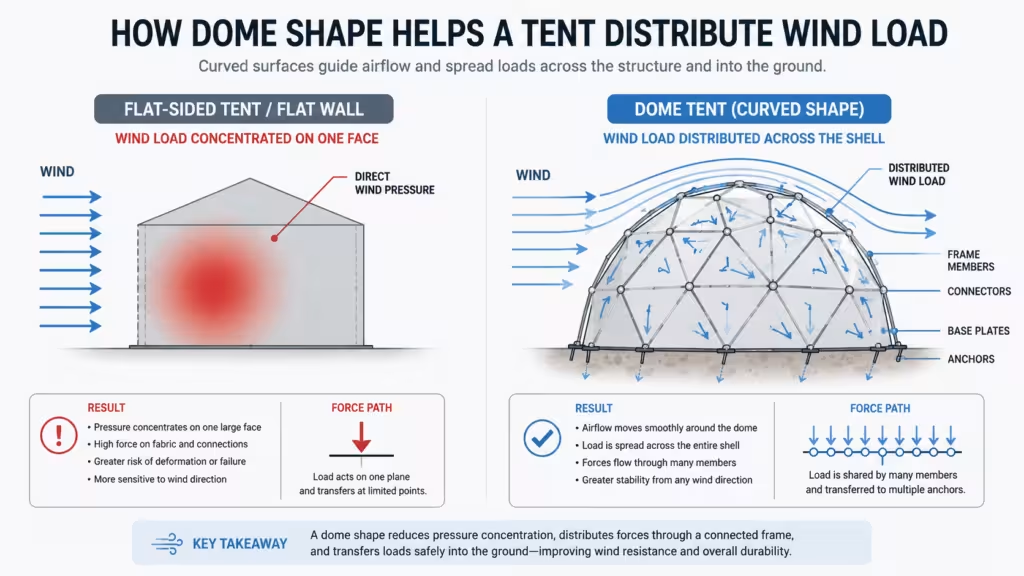
Wind behaves differently around a curved dome than it does against a flat wall. A flat vertical surface catches wind more directly. A dome shape allows airflow to move around the structure more smoothly, reducing the chance that pressure concentrates on one large flat face.
When a Glamping Dome Tent faces wind, the curved profile helps distribute pressure across the shell and frame. Instead of one wall taking most of the load, the force is transferred through multiple frame members, connectors, base plates, and anchors.
This is why dome tent wind resistance is not only about fabric strength. The geometry matters. The frame creates a network, and the shape helps share load across the structure.
For campsites, that matters because wind rarely comes from only one clean direction. Mountain valleys, coastal areas, lakesides, and open fields can create shifting wind patterns. A rounded structure is often easier to orient and manage than a flat-sided tent in exposed locations.
Why 850gsm PVC Tent Fabric Matters in Windy Outdoor Sites
For a Glamping Dome Tent, fabric weight is not just a marketing number. When buyers see 850gsm PVC tent fabric, it means the material weighs about 850 grams per square meter. In practical terms, heavier PVC fabric is usually thicker and better suited for long-term outdoor exposure than lighter fabric options.
Wind does not only push the tent. It also creates pulling force, flutter, local stress around seams, and tension around connection points. That is why tensile strength and tear resistance matter.
ASTM D5034 covers grab and modified grab procedures for determining the breaking strength and elongation of most textile fabrics, which is useful when buyers want to understand how fabric strength is tested rather than relying only on appearance. ASTM D2261 covers measurement of tearing strength by the tongue procedure, which is relevant when discussing tear resistant PVC fabric and rip-stop behavior.
A heavier 850gsm PVC fabric can improve tear resistance and tensile support when the tent is properly tensioned and installed. But it should not be treated as a magic number. Fabric quality also depends on coating, base cloth, seam welding, UV resistance, waterproofing, flame-retardant treatment, and long-term maintenance.
Elasticity and Tension: Why Controlled Flex Can Improve Stability
Some buyers worry when they see fabric move in the wind. That concern is understandable, but controlled flexibility is not automatically a problem.
In a Glamping Dome Tent, the fabric should be tensioned enough to avoid loose flapping, but not installed so poorly that local stress concentrates at seams, zippers, windows, or connection points. A properly tensioned soft shell can respond to wind movement without behaving like a loose sail.
Think of it this way: a rigid wall resists wind by staying stiff. A tensioned tent shell resists wind through shape, tension, and controlled movement. Too much looseness causes wear. Too much local stress can damage seams. The correct balance is what makes the system work.
This is why installation quality matters as much as material specification.
Frame, Connectors, and Anchoring: The Real Backbone of Safety
A Glamping Dome Tent cannot rely on fabric alone. The frame, connectors, base system, and anchors form the real load path.
Buyers should look carefully at:
- Frame material and coating
- Connector thickness and fit
- Bolt quality
- Base plate design
- Ground anchor or platform fixing method
- Wind rope or reinforcement options
- Installation manual quality
- Site-specific foundation advice
The anchoring method should match the ground. Sand, soil, grass, timber decks, concrete platforms, and rocky sites do not use the same fixing logic. A wind resistant tent needs a reliable connection to the ground, not just a strong frame.
For project sites with public accommodation, fire safety also matters. The Illinois Office of the State Fire Marshal notes that tents and membrane structures can present special fire hazards if applicable codes are not followed. NFPA 701 is commonly referenced for flame propagation testing of textiles and films used in certain applications, and buyers should confirm which fire-safety documents are required by the local authority.
Is a Glamping Dome Tent as Safe as a Fixed Building?
A fixed building and a dome tent do not use the same structural logic. A permanent building normally depends on rigid walls, roof framing, foundation, and local building code approval. A Glamping Dome Tent uses a lightweight frame, curved geometry, tensioned PVC shell, and anchoring system.
So the better question is not whether they are identical. They are not.
The better question is whether the tent is suitable for the site, weather conditions, operating season, guest use, and local approval requirements. In normal campsite and resort applications, a properly engineered and installed dome tent can be a practical alternative when fast deployment, relocatability, and visual experience matter.
However, extreme typhoon zones, heavy snow areas, exposed ridgelines, or sites without reliable anchoring require additional engineering review. A responsible supplier should be willing to discuss wind load, anchoring, fabric performance, frame specification, and maintenance rather than only showing beautiful project photos.
Modular Setup: How Dome Tents Reduce Labor Pressure
Installing a Glamping Dome Tent can be more efficient than building a permanent cabin, especially when the frame system is modular. Standardized poles, pre-made connectors, numbered parts, and prefabricated fabric panels reduce the amount of decision-making required on site.
For campsite teams, this matters because labor time affects project cost. A single tent may be manageable with an experienced crew. A full resort project requires repeatable installation logic.
A modular dome tent installation should include:
1.Clear part labeling
2.Foundation or platform preparation
3.Frame assembly sequence
4.Fabric positioning instructions
5.Tensioning method
6.Anchor tightening process
7.Door, window, and accessory installation
8.Final inspection checklist
When parts are standardized, training becomes easier. Crews can build the first unit slowly, then improve speed across later units.
How to Protect Tent Components
One advantage of a Dome Tent is that it can be disassembled and relocated. But reuse depends on handling. Poor removal can damage fabric, lose fasteners, bend connectors, or make the second installation harder than the first.
A Glamping Dome Tent becomes easier to reuse when the team follows a controlled process:
- Take photos before disassembly
- Remove fabric on a clean surface
- Do not drag PVC fabric over gravel or rough ground
- Clean and dry fabric before folding
- Keep sharp metal parts away from the fabric
- Label poles and connectors by section
- Store bolts and small hardware in sealed bags
- Avoid long-term compression on folded fabric
- Store components away from moisture and heat
This is especially important for seasonal camps, event accommodation, scenic sites, and resorts that may relocate units between operating zones.
Where Wind Resistant Dome Tents Are Used
Wind resistant dome tent designs are often used in places where guests want outdoor atmosphere but operators need faster construction and easier site adaptation.
Common applications include mountain camps, lakeside resorts, desert camps, coastal glamping sites, eco-tourism accommodation, scenic area lodging, temporary event camps, outdoor dining spaces, and seasonal hospitality projects.
Each site has different concerns. Mountain camps may face sudden wind and temperature shifts. Desert sites may face UV exposure and sand abrasion. Coastal resorts may need stronger corrosion protection and anchoring review. Forest camps may need moisture control and fire safety planning.
This is why buyers should not choose only by shape or interior design. The tent should match the location.
What Buyers Should Check Before Ordering
Before ordering a Glamping Dome Tent, buyers should ask for more than size and price.
Important checks include:
- Wind resistance rating or design reference
- Frame material and anti-corrosion treatment
- Connector design
- 850gsm PVC fabric specification
- Tensile strength and tear resistance data
- Waterproof and UV resistance
- Flame-retardant documentation
- Anchoring method
- Installation manual
- Spare parts supply
- Packing and labeling system
- Disassembly and storage guidance
- Project experience in campsites or resorts
When a Dome Tent May Not Be the Right Fit
A Dome Tent is flexible, but it is not the answer for every project.
Be cautious when:
- The site is in an extreme typhoon or hurricane exposure zone
- Heavy snow load is expected for long periods
- The ground cannot support proper anchoring
- Local authorities require permanent building approval
- Fire evacuation rules are complex
- The site lacks maintenance teams after storms
- The project needs permanent year-round operation in severe climates
In these cases, buyers should request site-specific engineering advice instead of relying on a standard catalog design.
Future Trend
Outdoor hospitality is moving toward faster deployment, lower site disturbance, stronger visual identity, and more flexible accommodation models. That is one reason dome tents remain attractive for glamping resorts and scenic camps.
The future will likely focus on stronger PVC fabrics, better flame-retardant performance, improved modular frames, more reliable anchoring systems, and easier disassembly for reuse. Buyers will also ask for clearer documentation: wind performance, fabric test data, installation procedures, maintenance guidance, and spare parts support.
Conclusion
A Glamping Dome Tent should not be judged only by its soft shell. Its real performance comes from curved geometry, 850gsm PVC tent fabric, frame strength, connectors, anchoring, installation quality, and maintenance discipline.
For campsite builders and resort engineering teams, the value is not only mobility. It is the ability to create attractive outdoor accommodation while controlling labor, reducing installation complexity, and planning for reuse. When a dome tent is matched to the site and installed correctly, it can provide a practical balance between flexibility, safety, comfort, and outdoor hospitality design.
FAQ
Is a Glamping Dome Tent safe in strong winds?
Yes, when the tent is designed with a suitable frame, proper anchoring, quality PVC fabric, and installed according to the site’s wind conditions.
Why does dome shape help with wind resistance?
The curved surface helps wind move around the tent, while the frame distributes pressure across multiple connection points and anchors.
Is a soft-shell dome tent weaker than a fixed building?
Not necessarily. It uses a different structure. Safety depends on geometry, frame strength, fabric tension, anchoring, installation, and maintenance.
Is a Glamping Dome Tent difficult to install?
A modular design can make installation more efficient because frame parts, connectors, and fabric panels are standardized and repeatable.
Can a dome tent be disassembled and reused?
Yes. Reuse depends on careful disassembly, cleaning, drying, labeling, packing, and proper storage of fabric, frame parts, connectors, and hardware.