

In the high-stakes world of alpine trekking and professional guiding, the gear you carry is your most critical life-support system. As modern manufacturing pushes the boundaries of material science, finding the best backpacking tent has evolved from a simple purchase into a complex engineering evaluation. Whether you are an individual adventurer or a procurement officer managing a fleet of gear for a guiding organization, the requirements remain the same: uncompromising protection, minimal weight, and operational longevity.
The outdoor industry has seen a massive influx of “ultralight” gear that often sacrifices structural integrity for marketing-friendly weight specs. However, for those operating in unpredictable environments—from the wind-swept ridges of the Sierras to the humid forests of the Appalachians—the best backpacking tent is the one that balances weight with the ability to withstand a midnight storm without structural failure. Professional outfitters understand that a failure in the field is not just an inconvenience; it is a liability.
Table of Contents
What is a Backpacking Tent?
Before diving into specifications, one must address the basic question: What is a backpacking tent in the context of 2026? Unlike a standard camping tent designed for a car-accessible campsite, a true backpacking shelter is defined by its compressibility, weight-to-volume ratio, and specialized pole geometry.
For commercial-grade applications, such as outdoor schools or rental programs, identifying the best backpacking tent involves looking for standardized components and ease of repair. A lightweight backpacking tent in this category must be intuitive enough for a novice to pitch in a downpour but robust enough to endure 50+ nights of use per season. This institutional-grade reliability is what separates professional gear from consumer-grade novelties. When evaluating fleet options, procurement managers prioritize specification consistency across hundreds of units to ensure seamless field maintenance.
How Much Should a Backpacking Tent Weigh?
When assessing a potential inventory addition, the primary metric is often weight. But how much should a backpacking tent weigh to remain viable for long-distance treks without compromising the safety of the user? Historically, a weight of 2.5 to 3 lbs per person was the gold standard. Today, that has shifted.
For a modern 2 person backpacking tent, a “trail weight” (poles, fly, and inner body) of 3.5 lbs to 4.5 lbs is considered the sweet spot for professional use. While you can find lighter options, they often utilize thinner 7D or 10D fabrics that are prone to puncture. For organizations looking for scalable inventory, evaluating the best backpacking tent involves choosing a slightly higher denier fabric. This ensures a better return on investment through reduced turnover and repair costs. A lightweight backpacking tent should never be so light that a single gust of wind compromises the frame stability.
Field-Tested Performance: The 2026 Competitive Landscape
Procuring the best backpacking tent for your specific mission requires looking at real-world data rather than laboratory ideals. Three categories currently dominate the professional landscape.
1.The Ultralight Specialist
Designed for the “Fast and Light” crowd, these tents utilize DCF (Dyneema Composite Fabric). While they offer the lowest weight, their high price point and lack of fire-retardant capabilities often make them less suitable for large-scale institutional procurement or long-term rental fleets.
2.The Versatile Backcountry Standard
These are the most common sights on the trail. They offer good interior volume and a reliable hub-pole system. However, they can struggle with condensation in high-humidity or sub-zero environments, making them a “fair weather” choice for many.
3.The Expedition King: Xingyue Double Layer Mountaineering Tent
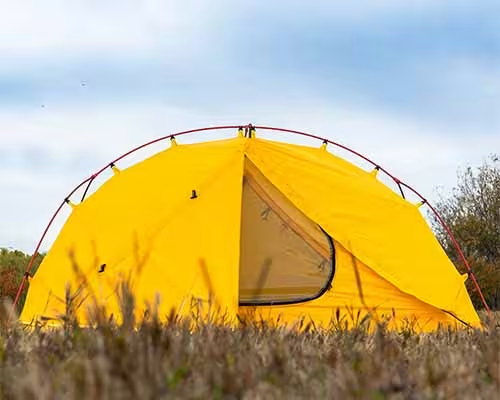
For those requiring a 2 person backpacking tent that can transition from forest floors to alpine base camps, the Double Layer Mountaineering Tent stands out. Its double-wall architecture is a masterclass in condensation management. By separating the breathable inner canopy from the waterproof rainfly, it ensures that moisture from respiration is moved away from the sleepers—a critical feature for multi-day expeditions.
This model is particularly favored by those looking for bespoke configurations and high-volume consistency. Its 210T waterproof polyester and 7001 aluminum alloy poles provide a level of structural rigidity that lighter tents simply cannot match. When performance in the field is non-negotiable, identifying the best backpacking tent for high-altitude resilience usually leads back to this rugged, double-layer design.
How Long Do Backpacking Tents Last?
Durability is a function of material science and proactive maintenance. So, how long do backpacking tents last in a professional context? A high-quality shelter should provide 5 to 7 years of frequent use if maintained properly. The primary enemy is not the wind, but UV radiation and hydrolysis (the chemical breakdown of waterproof coatings).
According to the Outdoor Industry Association (OIA), the shift toward silicone-treated fabrics (Silnylon) has significantly extended the lifespan of modern tents compared to the PU-coatings of the past. When the best backpacking tent must serve an institutional-grade fleet, managers look for materials that resist chemical degradation. Investing in the best backpacking tent pays off through lower replacement cycles and higher safety ratings for participants. Standardized hardware and replaceable pole sections are also hallmarks of a design built for a long operational life.
Comparison of Professional Backpacking Tents
The following table summarizes the technical specifications required for serious backcountry decision-making.
| Feature | Xingyue Double Layer | Ultralight DCF Models | Standard Hub-System |
| Material | 210T Ripstop / 7001 Alum | Dyneema (DCF) | 20D Nylon / Carbon |
| Architecture | Double-Layer (Alpine) | Single-Wall / Hybrid | Double-Wall (3-Season) |
| Best Use | Mountaineering / Rental | FKT / Thru-hiking | Weekend Backpacking |
| Weight Class | Balanced / Rugged | Extreme Ultralight | Standard Lightweight |
| Procurement Value | High (Scalable & Durable) | Low (Niche / Expensive) | Moderate |
How to Pack a Tent in a Backpack
Properly distributing weight is essential for preventing hiker fatigue and spinal strain. Learning how to pack a tent in a backpack is a foundational skill for any outdoor professional or guide. High-volume users often standardize the best backpacking tent models in their inventory to ensure that all staff are trained on a uniform packing protocol.
Don’t simply shove the tent bag into the top of your pack. Instead, separate the components to maximize the utility of the best backpacking tent:
- The Tent Body and Fly: Stuff these into the bottom or middle of the pack to fill the voids around heavier items like your cookset. This keeps the weight close to your center of gravity.
- The Poles: Slide these vertically into the side pocket or the dedicated hydration sleeve to protect them from bending.
- The Stakes: Keep them in a dedicated pouch to prevent them from puncturing your dry bags.
By mastering how to pack a tent in a backpack, you ensure the load remains balanced, which is vital when navigating technical terrain. This standardized packing method is a key curriculum point for many guiding certifications worldwide.
Conclusion: Securing the Best Backpacking Tent for Your Mission
The search for the best backpacking tent ends where your specific requirements meet proven engineering. For the solo enthusiast, weight may be the ultimate decider. But for the professional organization managing equipment for dozens of users, the focus shifts to reliability, ease of maintenance, and the ability to handle a wide range of climatic conditions.
Whether you are seeking a 2 person backpacking tent for personal adventure or standardizing your organization’s gear with a lightweight backpacking tent that won’t fail when the pressure is on, prioritize the “Double-Layer” advantage. Select the best backpacking tent to ensure your team stays safe, dry, and ready for the next summit, regardless of what the weather report says.
FAQ
Why is a double-layer design better for mountaineering?
It creates a thermal buffer and manages condensation. Moisture passes through the breathable inner layer and vents out, keeping the sleeping area dry.
How much should a backpacking tent weigh for a solo traveler?
Aim for a trail weight of 2 to 3 lbs. If you choose a 2 person backpacking tent for the extra space, expect to carry closer to 4 lbs for a durable model.
How long do backpacking tents last if I use them every weekend?
With proper drying after every trip and storage in a cool, dry place, a professional-grade tent will easily last 5 years or more.
What is a backpacking tent’s most common failure point?
Zippers and floor punctures. Look for YKK zippers and always use a footprint to protect the floor fabric from sharp rocks.
Do you offer bespoke specifications for high-volume orders?
Many professional manufacturers can accommodate specific material or color configurations for institutional fleets to meet specific regional safety codes.