
In the professional outdoor gear industry, a tent is far more than a simple fabric enclosure; it is a precision-engineered barrier designed to mitigate extreme environmental risks. For procurement specialists and specialized brands, the selection of Tent materials involves a sophisticated balancing act between tensile strength, weight-to-performance ratios, and long-term hydrostatic integrity.
Understanding the micro-level architecture of high-performance Tent materials—from the base polymer to the molecular coating—is essential for developing equipment that can withstand the rigors of high-altitude mountaineering.
Table of Contents
Base Fabric Architecture: Silnylon vs Polyester
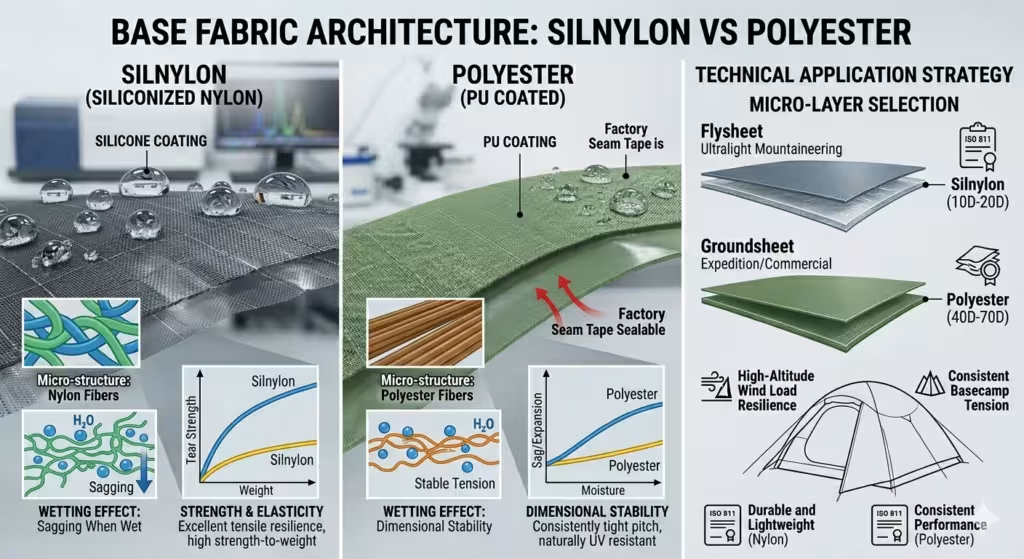
The debate between Silnylon vs Polyester remains the primary focus when defining the mechanical capabilities of a shelter. While both polymers are prevalent in high-end manufacturing, their behavioral responses to moisture and UV exposure vary significantly.
The Elasticity of Silnylon
Silnylon (Siliconized Nylon) is the gold standard for high-performance mountaineering. Nylon possesses an inherent elasticity, allowing the fabric to absorb high wind loads without structural failure. When evaluating Tent materials like Silnylon, buyers must consider that nylon is a hygroscopic polymer, which can cause the fabric to sag when wet.
The Stability of Polyester
In contrast, polyester offers superior dimensional stability. It does not expand or sag when exposed to rain, ensuring that the tent maintains its pitch tension. When comparing various Tent materials, polyester is naturally more resistant to UV degradation than untreated nylon.
Deciphering Denier: The Density of Reliability
In the technical specification sheet, Denier (D) is the unit used to measure the mass density of the yarn. For professional Tent materials, the denier count is a direct indicator of abrasion resistance and material thickness.
- 10D – 20D: Optimized for ultralight (UL) mountaineering.
- 40D – 70D: The industrial “sweet spot” for four-season reliability.
It is a common misconception that high-denier Tent materials always equate to a better tent. In reality, a high-tenacity “Ripstop” weave allows a 20D fabric to outperform a standard 40D fabric in tear resistance while reducing weight.
Hydrostatic Head: What is the Best Waterproof Rating for a Lightweight Backpacking Tent?
The most scrutinized metric is the Waterproof rating, measured as the Hydrostatic Head (HH). But what is the best waterproof rating for a lightweight backpacking tent? Assessing the quality of Tent materials through HH involves two standard benchmarks:
1.Flysheet Standards: A rating of 3,000mm to 5,000mm is recommended. Ensuring the Tent materials remain impermeable during storms is paramount for safety.
2.Groundsheet Standards: Groundsheets require a Waterproof rating of at least 5,000mm to 10,000mm to prevent capillary action.
Authority Reference: The ASTM D751 standard provides the industry-recognized testing procedures for coated fabrics. Source: ASTM International
Coating Chemistry: PU vs. Silicone vs. PE
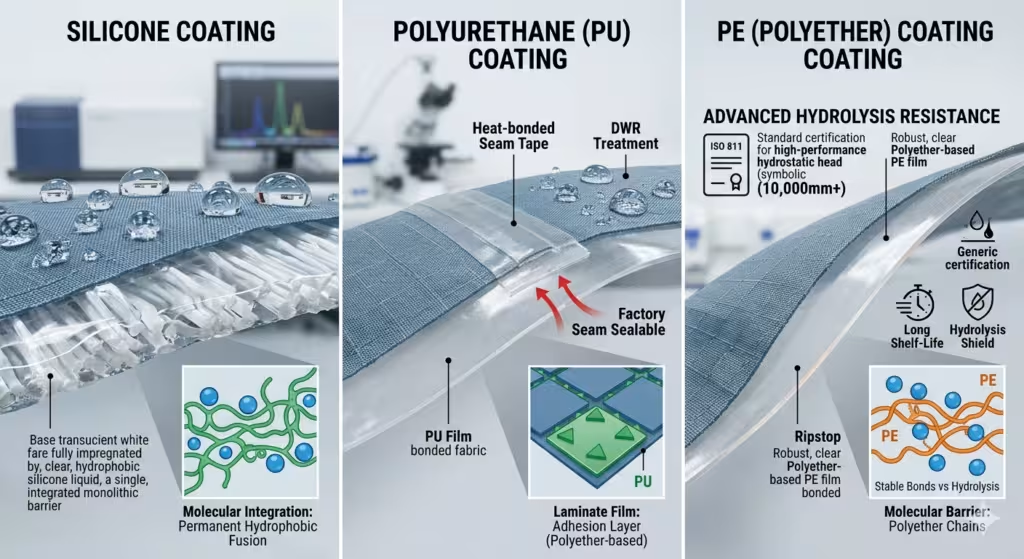
The final performance of Tent materials is determined by the coating chemistry.
- Silicone Coating: A non-porous finish that soaks into the fibers.
- Polyurethane (PU): The standard for most Tent materials, allowing for factory-sealed seam tape.
- Advanced PE (Polyether): Advanced Tent materials utilize Polyether-based PU, which is far more resistant to “hydrolysis”—the chemical breakdown that occurs in damp storage.
Seam Integrity and Manufacturing Precision
Even the most advanced Tent materials will fail if the construction points are compromised. Elite manufacturers utilize high-precision heat-bonded taping to ensure needle holes are sealed. For silicone-coated Tent materials, specialized liquid silicone adhesives are used to differentiate a professional shelter from a recreational tool.
Authority Reference: Research by the Textile Institute shows that coating adhesion is the dominant factor in seam-slip resistance. Source: The Textile Institute
Ready to engineer the next generation of professional shelters?
[Consult Our Technical Material Team]
FAQ
Why do some materials “mist” during heavy rain?
This is often not a failure of the Waterproof rating, but interior condensation. Using high-denier breathable inner fabrics helps mitigate this.
Which is more durable for long-term UV exposure?
Polyester-based Tent materials are typically the safer investment for high-altitude environments.
Does a higher Denier mean the tent is harder to tear?
Generally, yes, but the yarn’s “tenacity” and weave pattern are equally important.