

Setting up a temporary shelter often sounds simple, but anyone who has dealt with traditional tent systems knows how time-consuming and physically demanding it can be. From aligning poles to correcting uneven frames, the process can easily turn into a frustrating task. This is where the inflatable air tent quietly changes expectations. Instead of focusing on complicated structures, it shifts attention to speed, stability, and usability, especially in real outdoor and temporary-use scenarios where time and manpower are limited.
Table of Contents
Understanding the Structure Behind an Inflatable Air Tent
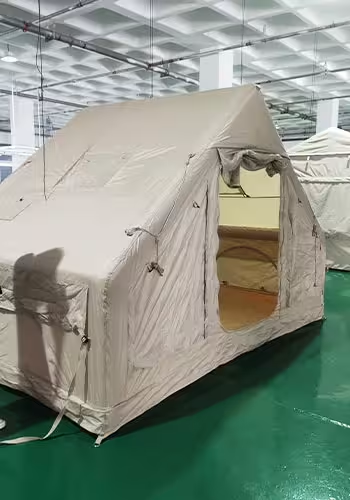
The most noticeable difference is the absence of rigid poles. An inflatable air tent relies on air beams that form the main supporting structure. Once inflated, these beams create a stable frame that distributes pressure evenly across the tent body.
This design is not about softness or flexibility for its own sake. The air-filled beams act as continuous supports, meaning there are fewer weak points compared to segmented metal frames. When external force is applied, such as wind or uneven ground pressure, the structure absorbs and redistributes that force instead of resisting it rigidly.
Another advantage is consistency. Every setup follows the same structural logic, reducing human error during assembly.
Speed of Setup and Why It Actually Matters
In many use cases, speed is not just a convenience but a requirement. An inflatable air tent can be deployed in minutes, which significantly changes how people plan outdoor or temporary spaces.
Quick setup reduces dependency on trained labor. One or two people can handle the process without specialized tools. This is particularly valuable when conditions are unpredictable or when repeated assembly and disassembly are required.
Faster setup also means less disruption. Whether it is a family campsite or a time-sensitive outdoor operation, reducing setup time allows users to focus on the activity itself rather than preparation.

Portability Without Compromising Strength
Removing metal frames does more than simplify setup. It also changes how the tent is transported and stored. An inflatable air tent folds into a compact, lightweight package that is easier to carry and load.
This portability does not come at the cost of durability. The air beam structure, once inflated, creates a rigid form capable of maintaining shape under stress. Unlike traditional designs where a single bent pole can compromise stability, air-supported structures maintain integrity even when external pressure varies.
For users who frequently move locations, this balance between strength and portability becomes a decisive factor.

Performance in Wind and Unstable Ground Conditions
Outdoor environments are rarely perfect. Slopes, uneven terrain, and sudden weather changes are common challenges. An inflatable air tent performs well in these situations because its structure adapts rather than resists.
Air beams flex slightly under pressure and return to shape once the force is reduced. This dynamic response improves stability during strong winds. Ground contact points are also more forgiving, allowing the tent to sit securely without precise leveling.
Instead of relying on weight to stay grounded, the design emphasizes balance and load distribution.
Practical Uses Across Different Scenarios
The versatility of an inflatable air tent comes from how easily it adapts to different needs. In family camping, it offers quick shelter and a sense of security. In emergency or relief scenarios, fast deployment and structural reliability are critical advantages.
For outdoor events or temporary exhibitions, the clean interior space and flexible layout allow for efficient use of area. The absence of internal poles creates uninterrupted room, making the tent more functional for both people and equipment.
This adaptability explains why the same structural concept works across very different environments.
Maintenance and Long-Term Use Considerations
Ease of use does not stop at setup. An inflatable air tent is also simpler to maintain. With fewer mechanical components, there are fewer points of failure. Routine checks focus mainly on air integrity and surface condition rather than joint alignment or metal fatigue.
Cleaning and storage are straightforward. Once deflated, the tent can be folded without worrying about bending or damaging rigid parts. This reduces long-term wear and extends service life, especially for users who rely on frequent deployment.
Who Benefits Most From This Type of Tent
Not every user needs this design, but for those who value efficiency, it makes a noticeable difference. People who regularly assemble temporary shelters, work with limited manpower, or operate in changing environments benefit the most.
The inflatable air tent is especially suitable for users who prioritize repeatable results. Each setup follows the same process, producing consistent performance regardless of location. This reliability builds confidence over time.
A Shift in How Temporary Structures Are Designed
The growing popularity of the inflatable air tent reflects a broader shift in design thinking. Instead of adding complexity, modern solutions focus on removing unnecessary elements.
By simplifying structure without sacrificing performance, this approach addresses real-world problems rather than theoretical advantages. It does not attempt to replace all traditional tents, but it offers a practical alternative where speed, portability, and adaptability matter most.
In that sense, the inflatable air tent is less about innovation for its own sake and more about redefining what users should reasonably expect from a temporary shelter.